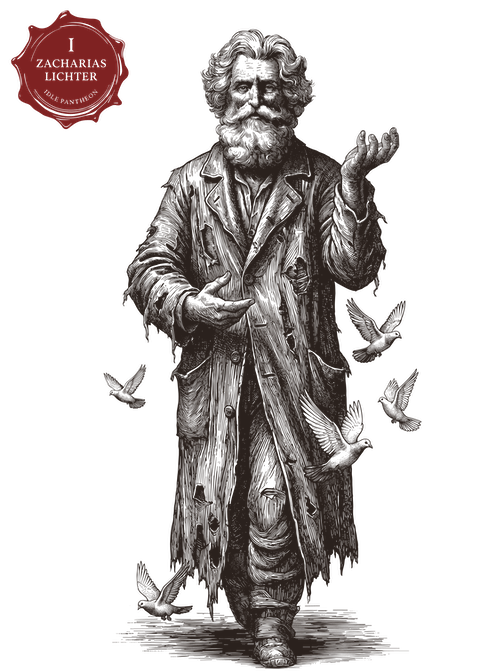
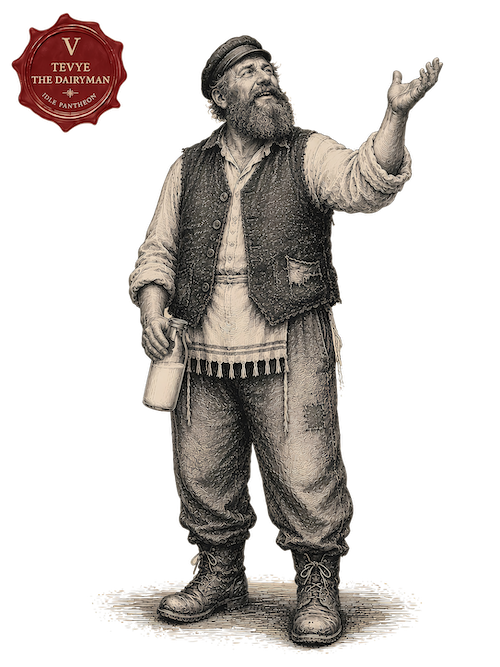
Idleness
10
Wisdom
9
Wanderlust
4
Defiance
10
Sociability
7

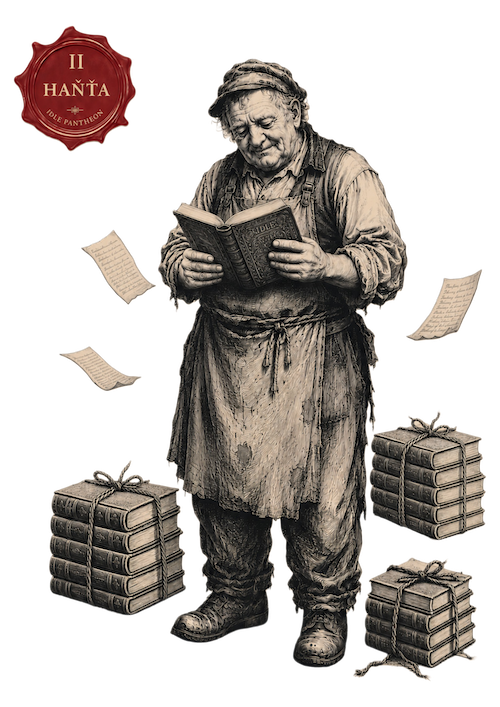
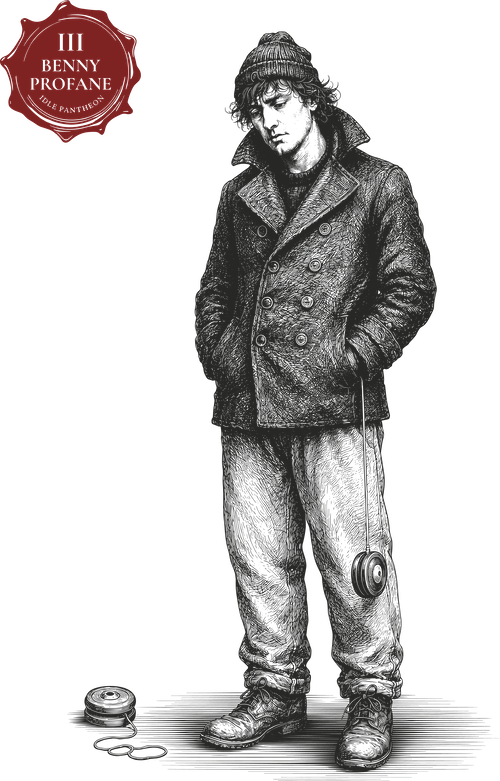
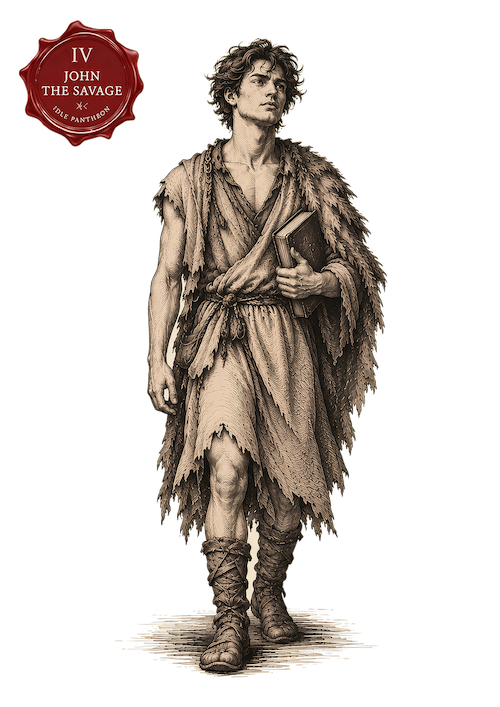
A monthly cabinet of patron loafers, idle prophets, and literary anti-industrialists. The first five cards are now on file; the rest remain in various states of delay.
The Sixth Figure
Three clues. One reveal on November 27. Guess by replying to the letter, and a Tevye postcard finds you by post, right or wrong.
“He is an aristocrat with no fortune left, only manners, and the manners are immaculate. He spends his nights in the taverns of a crumbling capital, a city poised between East and West and sliding gracefully toward neither, and he pursues pleasure and beauty there with the discipline of a monk pursuing God: the same nightly office, the same total devotion, the same indifference to every worldly career. He owns almost nothing and carries himself as though he owns the city, and the city, which knows quality when it candle-lights it, has more or less agreed.
His melancholy is not a mood but a medium: he moves through it the way other men move through air, and it suits him so completely that strangers across the tavern assume it is wisdom. It may be. The question is the whole novel.”
“He appears in a famously ornate Romanian novel of the 1920s, written in a prose so rich, archaic, and bejeweled that translators circled it for ninety years before one finally carried it across. He is one of a small band of elegant wastrels, the rakes of an old princely court, who drink and dream and decay together through the nights of interwar Bucharest: a brotherhood of dissolution, each member ruined in his own register, conducting their decline in candlelit taverns with the solemnity of a liturgy.
Within the band he is the melancholy one, the refined one, the one whose past contains vast voyages and a sorrow never fully named, and whose company the book's narrator finds almost unbearably dear. The novel's epigraph, borrowed from a French statesman, gives the whole world of it in one line: here we are at the gates of the Orient, where everything is taken lightly.”
The third clue, the indiscretion, arrives next Friday.
November 2026 · Clues below
December 2026
January 2027
February 2027
March 2027
April 2027
May 2027
The Doctrine of Twelves
Everything here comes in twelves. Twelve idlers, twelve months, twelve copies of each print, twelve seats at the table. The number is not decoration; it is the gazette's quiet insistence that some things should remain countable.
Volume II · Year Two
Volume I is, by design, the men. Volume II, when it comes, will be the women.